Location: Los Angeles, CA
Email: jeremypatrick36@yahoo.com
Phone: (805) 630-8472
Position: Automation Engineer
Company: Capsida Biotherapeutics
Duration: May 2022 - June 2025
Status: Available Immediately
Innovative Laboratory Automation Engineer with expertise in system design, assembly of lab automation robotics, and hardware integration. Develop and implement automation solutions that enhance laboratory efficiency and accuracy, ensuring seamless integration of robotic systems into existing laboratory workflows. Proven experience in system architecture, experimental design and system qualification, emerging technology integration, vendor negotiations, and capital expenditure management. Experienced in driving full lifecycle of projects from conceptualization to implementation while managing cross-functional teams and contractor relationships.
Led automation architecture for AAV engineering workflows in pharmaceutical research environment. Managed GitHub repositories, deployed high-throughput screening platforms, and developed automation systems that generated critical data supporting two FDA-approved IND applications for clinical trials. Ensured data integrity and traceability requirements for regulatory submissions.
Led Next-Generation Sequencing research and development initiatives as designated automation specialist for automated nucleic acid extraction systems during COVID-19 testing expansion. Developed and validated whole genome enrichment workflows, pioneered automation protocols for high-throughput genomic analysis, and established quality control frameworks for public health genomic surveillance programs.
Performed high-throughput clinical testing in accredited laboratory environment. Mentored teams on automation systems, developed optimization scripts for resource management, and maintained strict compliance with clinical laboratory standards.
Implemented Hamilton Microlab Prep automation systems, significantly increasing DNA extraction throughput.
SLAS Conference: Represented Capsida Biotherapeutics at SLAS conferences, presenting high-throughput screening platform innovations to the automation community. Active engagement with industry professionals and attendance at conferences to stay current with emerging technologies and trends.
Regulatory Success: Automation systems generated critical datasets supporting two FDA Investigational New Drug applications and CDPH epidemiological surveillance programs, demonstrating expertise across pharmaceutical and public health regulatory frameworks.
Capsida Biotherapeutics needed to scale their AAV engineering capabilities to meet increasing demand for high-throughput screening. The existing manual NGS workflow was limited to 32 samples per run, creating bottlenecks in the drug development pipeline and limiting research capacity.
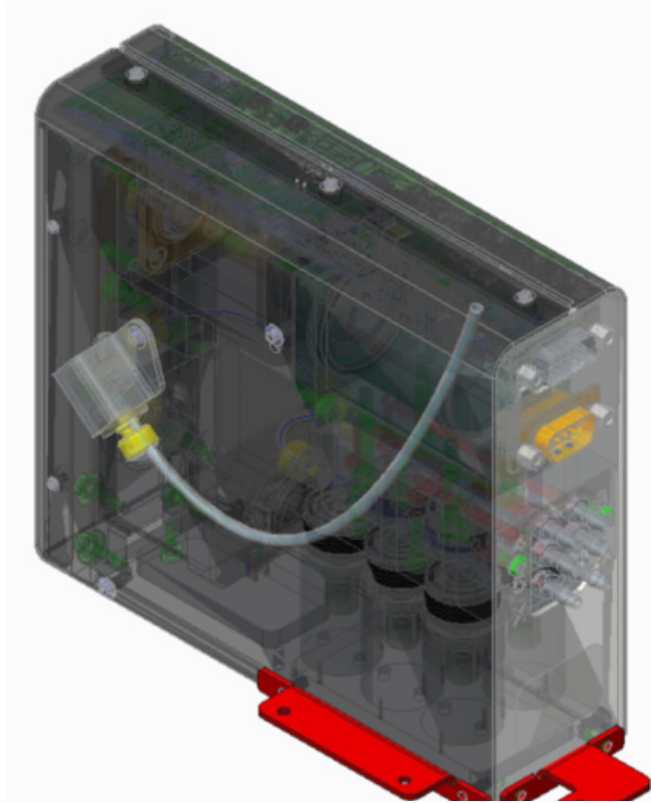
Design, integrate, and deploy a fully automated high-throughput NGS platform that could handle 384 samples per run while maintaining data integrity and sample quality. The system needed to incorporate solid phase extraction using pneumatic systems and integrate seamlessly with existing LIMS infrastructure.
Reagent Fill Module
Fluidic component requiring solenoid lifecycle validation for reliable operation
Automation Pipeline in Action: View automated NGS workflow demonstration
This project transformed Capsida's research capabilities, enabling them to process significantly more samples with higher accuracy and lower costs. The automated platform became the foundation for their high-throughput screening operations, directly contributing to accelerated drug development timelines. The automation systems developed generated comprehensive datasets with full data integrity and traceability that were instrumental in two successful FDA Investigational New Drug (IND) applications, enabling advancement to clinical trials.
Regulatory Contribution: Platform designed to meet pharmaceutical data standards, ensuring complete traceability and quality control required for FDA submissions. Additional information available at capsida.com
AAV vector titer assessment was a critical bottleneck in the production pipeline. Manual ddPCR processes were prone to variability, with coefficient of variation reaching 15%, limiting batch sizes to 8 samples and requiring significant operator time for quality control.
Develop an automated AAV vector titer assessment system using ddPCR technology that would improve assay reproducibility, increase batch capacity, and reduce manual intervention while maintaining precision across diverse vector serotypes.
Statistical analysis of manual process variability and identification of root causes
Single-use pathway strategy to eliminate cross-contamination risk
Comparative studies across multiple vector serotypes for robustness
Multi-tier quality control with automated exception handling
Achieved industry-leading precision with CV <3.2%
95% reduction in manual operator time
Proven performance across diverse vector types
DMSO Sample:
Aqueous Sample:
Outlier: Channel 2 showed 10.2% CV vs 1.7-3.5% for other channels
Our comprehensive validation identified Channel 2 as a statistical outlier (10.2% CV vs 1.7-3.5% for other channels), demonstrating rigorous data quality analysis. Even including this outlier (3.4% CV), Hamilton demonstrated superior accuracy across both sample matrices, achieving 5x better accuracy for challenging DMSO samples. This data-driven analysis directly informed our strategic platform selection. We took full ownership of this critical automation decision, selecting Hamilton for its optimal balance of accuracy, reliability, and comprehensive end-to-end automation capabilities that transformed our entire workflow architecture.
I'm excited about the opportunity to contribute to AstraZeneca's automation initiatives and help drive the next generation of laboratory efficiency and innovation. Looking forward to our discussion!
Email: jeremypatrick36@yahoo.com
Phone: (805) 630-8472
Status: Immediately Available
Location: Los Angeles, CA
Transition: Recent completion of major automation project at Capsida